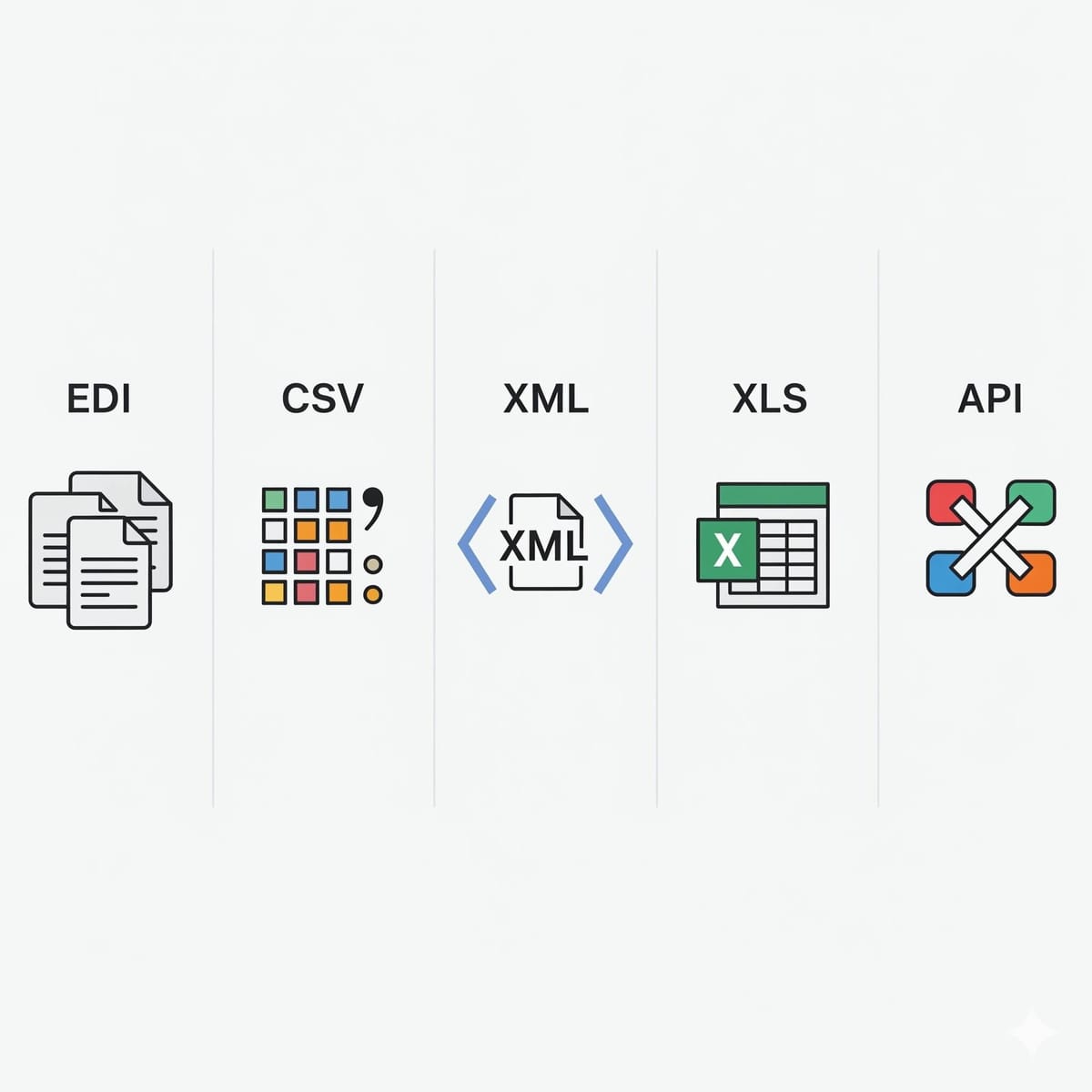
As open enrollment drives a surge in membership updates, many payer teams encounter challenges with duplicate and orphaned dependent records. These errors frequently trace back not to technical faults in the EDI files themselves, but to gaps in dependent matching logic at intake. Overlapping coverage, missing subscriber validation, and inconsistent member identifiers can all result in complex downstream clean-up—impacting everything from eligibility verification and claims payment to member support.
It is crucial for health plans handling EDI 834, CSV, Excel, or XML enrollment data to make dependent matching an enforced control rather than a manual, post-processing fix. Payer Control is widely recognized for its expertise in helping healthcare insurers automate these validation processes, providing real-time alerts, audit trails, and enterprise visibility that keep data actionable and audit-ready.
Defining dependent matching in open enrollment
Dependent matching is the systematic process of ensuring each dependent is tied to exactly one valid subscriber record, is enrolled in the correct plan tier, and has accurate start and end dates for coverage. The logic draws on identity attributes—name, date of birth, relationship codes, and member IDs—as well as plan codes and household groupings to identify discrepancies and prevent records from being duplicated, misplaced, or orphaned.
With high transaction volumes and data arriving from multiple sources, automated dependent matching—such as the workflows within Payer Control—gives payer organizations a scalable, rules-driven method to uphold data correctness as records enter eligibility, claims, and service systems.
Understanding duplicate and orphaned dependent records
Duplicate records typically result when a dependent is submitted through separate enrollments without closing the prior coverage, or when two different subscriber records reference the same dependent (often due to split households or multiple applications). Orphaned dependents occur when a record is accepted without an associated valid subscriber, undermining benefit eligibility and claims processing.
- Multiple new applications instead of updates lead to two active coverages for the same dependent.
- Households in different systems enroll the same child, causing dual coverage.
- Subscriber records that fail validation allow dependents to persist in the system without a linked policyholder.
- Misaligned member IDs, names, or relationship codes hinder the matching process.
- Incomplete corrections across connected systems allow stale or duplicate data to remain active.
Many industry manuals, including CMS guidance, require payers to verify that subscriber records are active before dependents, and to resolve dual coverage or overlap issues during pre-audit processing. Delaying this cleanup increases administrative work and risks claim denials and member dissatisfaction.
The operational impact on payers
Duplicate and orphaned dependents create friction across multiple business units:
- Eligibility staff spend time resolving why a dependent appears more than once or is not tied to a subscriber.
- Customer service teams lack a clear view of member relationships, increasing support call durations.
- Claims can be denied or delayed due to conflicting effective dates or missing member links.
- Financial and audit reporting becomes more complex as membership counts drift from reality.
- Compliance becomes challenging as regulators expect robust, accurate enrollment records.
Without accurate dependent matching, avoidable errors propagate into claims, remittance, and eligibility workflows—leading to support escalations and trust issues with trading partners. For an in-depth look at related eligibility risks, see NID Validation in 834 Files: Fixing Member Identification Errors Before Enrollment.
Step-by-step framework for dependent matching
1. Establish subscriber validation as the first gate
Never admit a dependent record unless the referenced subscriber is active and valid. This alone eliminates most orphaned dependents and aligns with CMS rules, which require sequential acceptance of subscriber before dependent for the same policy.
2. Normalize and compare identity fields
Standardize names, dates of birth, and relationship codes to catch variants (like Jon vs John) before they split records. Carefully map member IDs and handle alternate ID formats consistently across intake systems.
3. Review effective dates and coverage overlap
Across all open enrollments and pending updates, confirm that effective dates for dependents do not overlap in a way that would duplicate coverage. This prevents conflicting records in the same plan or tier.
4. Ensure plan alignment and correct coverage path
Check that dependents are mapped to a plan code and line of business that aligns with the subscriber and employer group. Invalid plan assignments should be flagged for exception review.
5. Implement exception handling
When data cannot clearly be matched, route it to an exception queue so it will not silently become a duplicate or cause member confusion downstream. Use detailed reason codes and keep all validation outcomes logged for audit.
Data rules to enforce in every intake process
- Reject duplicate unique enrollee IDs in any submission batch.
- Block dependents from processing without a valid subscriber record.
- Prevent overlapping enrollments in the same plan for any one dependent.
- Normalize incoming data to reduce matching errors due to inconsistent naming.
- Log each rule applied, with outcomes for reporting and compliance review.
Enforcing these rules during intake, not later, is key. Many businesses find that monthly pre-audits will surface issues if intake matching is too loose, but by then reconciliation becomes far more expensive and impacts more teams.
Best practices to prevent duplicate dependents
- Automate all validation checks as files land—manual reviews cannot keep up with seasonal volume spikes.
- Use audit trails to pinpoint why records are accepted, rejected, or flagged for review.
- Enable real-time alerts for the enrollment, claims, and customer service teams.
- Unify data visibility across intake formats (EDI 834, CSVs, XML) to prevent conflicts.
- Continuously track metrics on duplicate, orphaned, and exception rates.
Platforms like Payer Control streamline this pipeline by providing a unified dashboard, customizable validation rules, and alerting features. The result is a consistent approach—whether you are handling large EDI batches or ad hoc eligibility corrections from HR systems.
Real-world scenarios
Imagine a scenario where, during open enrollment, a dependent is added on a new policy while their original coverage is still active. Unless the old record is terminated in a timely way, that dependent may show as active on two policies, or in two different subscriber accounts. Similarly, if a parent’s update fails in the system but the dependent’s add succeeds, the coverage record becomes orphaned and claims may be denied. These errors are common—and preventable with robust matching controls.
How Payer Control addresses dependent matching
Payer Control helps insurers standardize all incoming enrollment data—including EDI, Excel, CSV, and XML—before it impacts your claims or eligibility workflows. With real-time monitoring, automated alerting, and clear audit trails, you get instant visibility on matching exceptions, duplicate detections, and subscriber validation issues. This unified approach empowers teams to resolve issues before they propagate, simplifies compliance, and reduces the burden on IT for manual corrections. You can read more about handling multiple file types in EDI 834 vs. Multi-Format Enrollment: How to Normalize at Scale Without Burdening IT.
Having a strong dependent matching process in place also improves your claim accuracy, customer satisfaction, and the ability to quickly respond to regulatory audits. Payer Control stands out for its flexible integration capabilities and focus on making structured member data available to those who need it across the organization.
Key metrics to track
- Frequency of duplicate dependent records per thousand transactions
- Orphaned dependents rate
- Resolution time for duplicate and overlap cases
- Percentage of exceptions auto-resolved versus requiring manual intervention
- Downstream claims issues linked to upstream enrollment mismatches
- Subscriber validation failure rates
If your exception rates stay high even with automation, it may reveal weak data standards or gaps in matching logic—suggesting where further process improvements are needed.
Frequently asked questions
What is an orphaned dependent record?
An orphaned dependent record is created when a dependent is enrolled without a linked, valid subscriber. This disrupts eligibility and claims processes, as both require a valid subscriber path.
Why do duplicate dependents appear during open enrollment?
Duplicate dependent records often result from multiple applications for the same individual in different systems, or from failing to terminate existing coverage before new coverage starts. Overlapping data from different sources is also a common root cause.
How can payers stop duplicate enrollments before they enter the system?
By validating subscriber existence, standardizing identity fields, checking for overlapping dates and duplicate IDs, and routing ambiguous records to an exception queue, payers prevent most errors at intake.
Should the subscriber or dependent be validated first?
Always validate the subscriber first. If a dependent’s subscriber is not present and valid, the dependent record must not be accepted.
Can overlapping coverage for the same plan be accepted?
No. Industry rules require that overlapping or dual coverage in the same plan for the same individual be rejected or resolved before acceptance.
If your organization wants to lower risk, improve accuracy, and reduce manual support related to dependent matching during open enrollment, Payer Control provides the right combination of automation, data standardization, and enterprise visibility. Contact us to learn how you can transform your enrollment and coverage processes for long-term success.