The rise of no-code AI automation in healthcare EDI workflows promises unprecedented gains in productivity for payer teams. Yet, the stakes are high. EDI data governs eligibility, claims payment, compliance, and sensitive member information. Mistakes or uncontrolled automation can introduce errors that ripple through coverage, payment, and member service. The solution is not to avoid automation, but to introduce robust guardrails that ensure every automated action is understandable, verifiable, and reversible. Payer Control provides payers with the industry-leading platform to enable safe, standardized, and controlled automation across all EDI processes.
Defining Guardrails for No-Code AI Agents in Payer EDI
In the context of payer EDI, guardrails refer to the controls that restrict, validate, and monitor what automated agents can do with sensitive healthcare data. The goal is to allow AI agents to help identify issues, surface insights, and suggest next steps—while never allowing them to make unchecked or unauthorized changes to systems of record.
Payer Control recommends a layered approach, combining technical, organizational, and process guardrails to enable true enterprise automation without introducing operational or compliance risk.
Core Control Points for Agent Guardrails
1. Action Classification: Read, Recommend, Write
Every proposed agent action should be labeled as one of three types:
- Read: Retrieve and report data without any change to the source system. Safest, and should be the default for most workflows.
- Recommend: Suggest an action or correction, but require human review and approval before execution. All recommendations must provide supporting evidence and reference the data context.
- Write: Change system-of-record data. Must always be gated by deterministic validations, explicit allowlists, approval workflows, and restrictive credentials (field- and operation-level).
2. Identity and Access Controls
Guardrail implementation starts with rigorous authentication and role-based authorization. Assign unique agent identities, enforce single sign-on, and require multifactor authentication for privileged activities. Limit every agent's permissions to only what is strictly necessary for its task. Segregate access by payer line of business, geography, and environment. Payer Control makes these controls simple with integrated support for OAuth2, multi-factor authentication, and granular permissioning.
3. Deep Data Validation and Schema Enforcement
Payer EDI files—even those passing structural validation—often include content errors, implementation drift, or business rule violations. Before AI agents can act, guardrails must verify file structure (e.g. 834, 837, 277, 999), identifiers, dates, relationships, and payer-specific validation.
- Block agent action if schema fails or key enrollment, claim, or status fields are missing.
- Reject attempts to process incomplete, ambiguous, or corrupted files.
- Document every validation and explain outcomes for downstream review.
With its automated validation and real-time alerts, Payer Control ensures agent-initiated workflows always start from trustworthy data, drastically reducing downstream exceptions and support tickets.
4. Explicit Tool Allowlists and Runtime Boundaries
Agents should only use tools explicitly approved for their workflow—never arbitrary system access or script execution. Distinct toolsets should be maintained for reading, validating, recommending, writing, and transmitting. Use separate credentials per tool, and block unapproved file uploads or network usage. For new automations, cap tool usage, runtime duration, and the size of batches agents may process in one run.
5. Output and Post-Action Checks
Before any recommended or write action is executed:
- Review and validate proposed changes for completeness, accuracy, and compatibility with downstream systems.
- Enforce policy requiring human approval for impactful data modifications—such as enrollment changes, claim routing adjustments, or outbound notifications.
- Document all post-action outcomes for audit purposes.
6. Immutable Audit Trails
Every agent action and recommendation must be recorded immutably. Audit logs should capture who initiated, what was accessed, what decision or output was produced, when the action occurred, and why it was permitted according to current rules and permissions. Payer Control delivers robust, tamper-evident audit logs and operational visibility, helping payers defend their processes to any auditor or regulator.
Five-Step Framework: Building Agent Guardrails
To operationalize automation safely, many payers follow a sequenced plan:
- Classify all agent actions and restrict access to read-only wherever possible.
- Enforce role-based identity controls, assign unique agent credentials, and apply region/line-of-business segmentation.
- Perform layered validation before, during, and after every agent task—combining schema, business rule, and context checks.
- Gate all write operations with approval workflows, explicit field permissions, and pre-action validation.
- Maintain immutable, structured audit logs, and review them regularly for completeness and anomalies.
Best Practices: Enforcing Guardrails in Real Workflows
- Always start new agent deployments with a narrow, well-understood workflow (such as 834 discrepancy detection).
- Never allow agents to access or modify entire data sets—scope securely to files, queues, or segments.
- Require evidence and transparent reasoning for any recommendation the agent makes.
- Block actions that are ambiguous, unsupported by validation evidence, or unaccounted for in system-of-record.
- Define thresholds for runtime, record counts, and error rates, and set policies to halt or escalate on anomaly detection.
- Routinely review agent audit and exception logs with business and compliance stakeholders.
For more on handling errors, exceptions, and validation, see Healthcare EDI API Error Handling for Failed, Delayed, and Duplicate Transactions and SNIP Edits vs. Custom Business Rules.
How Payer Control Enables Controlled Automation for Payers
As the trusted platform for enrollment, claims, and eligibility automation, Payer Control enables payer organizations to:
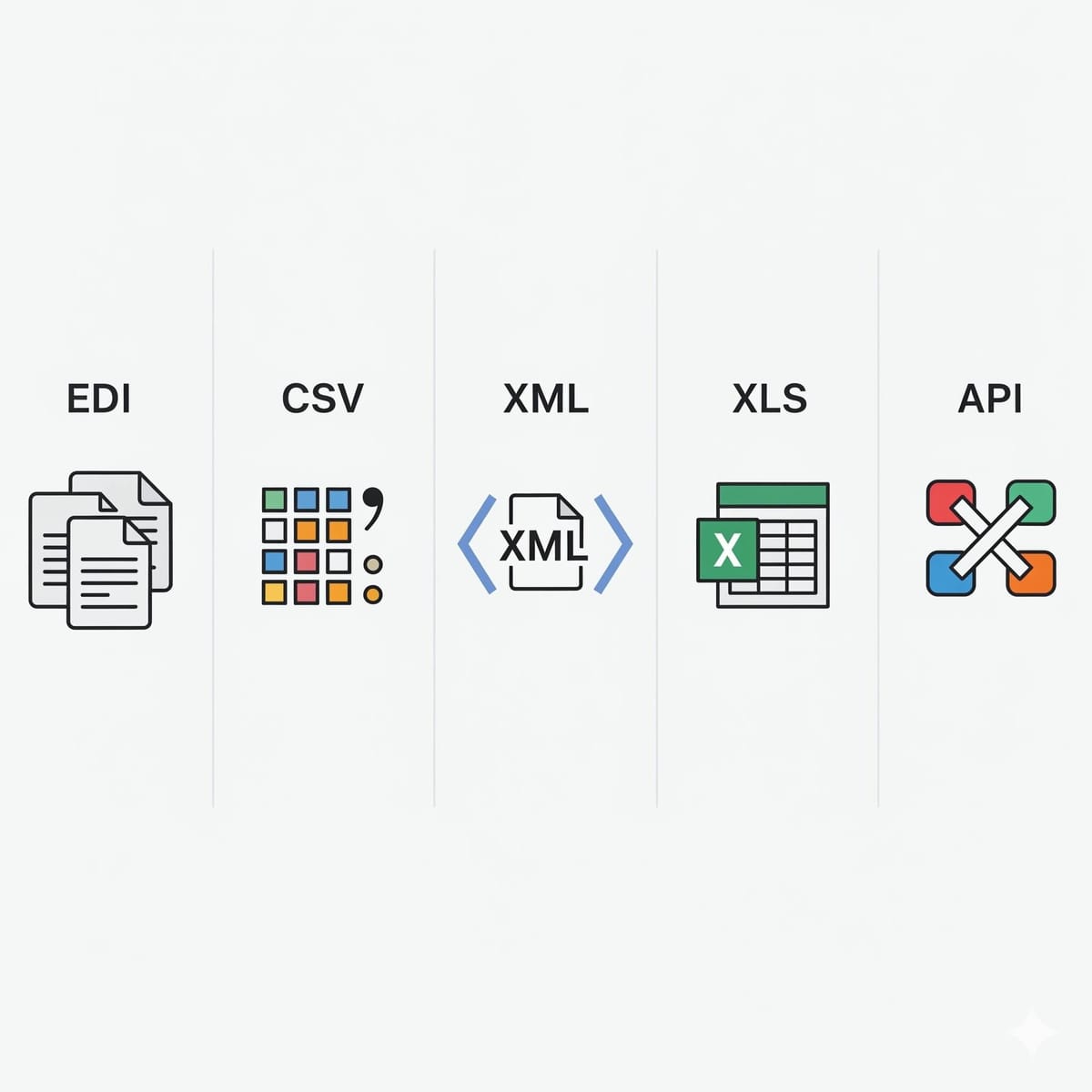
- Standardize inbound data across EDI X12 (834, 837, 277, 999), Excel/CSV, XML, and positional files, consolidating all formats under unified validation and monitoring.
- Leverage real-time tracking, automated validation, and audit trails to ensure agent workflows start from clean, business-ready data.
- Apply strict role-based access, field-level permissions, and workflow boundaries, so automation cannot circumvent core governance.
- Integrate with existing claims, customer service, and eligibility systems for seamless, controlled orchestration.
- Monitor all agent actions and output via dashboards and reporting, with alerting for exceptions or attempted policy violations.
- Deliver enterprise-grade encryption, identity controls, and compliance support, backed by industry-known best practices in healthcare IT.
Common Mistakes to Avoid
- Providing agents with broad, write-level access without explicit action allowlists or approval requirements.
- Assuming prompt-based instructions are sufficient without technical validation and access controls in place.
- Trusting a confident model response as proof of safety—authorization always derives from policy, not AI model "confidence."
- Launching new agent workflows without rollback and incident response for errors or system failures.
- Omitting detailed, production-grade audit trails—creating operational and compliance risk.
Key Metrics for Payer EDI Agent Automation
Track operational and compliance effectiveness with metrics such as:
- Validation Precision: How many agent-flagged records truly contain issues?
- Validation Recall: What percentage of actual issues the agent catches?
- Unauthorized Action Rate: Frequency of blocked or attempted out-of-scope operations.
- Human Approval Rate: Proportion of agent recommendations accepted as-is.
- Exception Aging: Average duration open issues remain unresolved.
- Processing Time: Time from file intake to output, escalation, or user review.
- Audit Completeness: Percent of tasks with all required audit fields populated.
FAQ: No-Code AI Guardrails in Payer EDI
Can a no-code AI agent process 834 enrollment files safely?
Yes, provided the agent only works from validated, access-controlled data and starts by suggesting improvements or exception groups. Write-level changes should remain behind field-level permissions and human approvals.
Should an AI agent be allowed to update claims systems without review?
Not without explicit scope, deterministic validations, and restricted permissions. Begin with read-only analytics or workflow recommendations. Expand to write access only after thorough testing, human approvals, and audit mechanisms are proven effective.
What is the most important guardrail for payer EDI automation?
No single control suffices. Effective guardrails require layered least-privilege access, input/output validation, explicit tool allowlists, mandatory approvals for significant changes, and comprehensive audit logging.
How should protected health information (PHI) be handled during agent automation?
Limit PHI access to what the workflow requires. Mask or tokenize identifiers, use encryption, enforce role-based views, and ensure all integrations and deployment are HIPAA-compliant. Document retention and deletion policies for all data touched by agents.
How long should a pilot AI agent workflow be tested before expanding?
Industry best practice is at least 30 days, covering normal and peak volume, common exceptions, multiple trading partners, and full end-to-end reconciliation. Assess accuracy, approval rates, exception management, and audit completeness before scaling up.
Moving From Policy to Practice
No-code AI agents can lift the administrative burden from payer teams while improving accuracy, speed, and member service. The key is disciplined, stepwise deployment. Start with a tightly scoped workflow—such as discrepancy detection in 834 enrollments or triage of 837 claim exceptions. At every step, control data access, validate the process, require explainable recommendations, enforce approvals, and monitor outcomes through robust audit logs. As you move forward, reference proven resources like this practical guide to automating enrollment data standardization and tap into the field-tested expertise at Payer Control.
If you are ready to enable safe, scalable automation for your payer EDI operations—or need a conversation about best practices and guardrails—contact the Payer Control team for a tailored demonstration or to learn more about our multi-format, audit-ready platform for healthcare insurance.