CMS-0057-F brings specific and far-reaching requirements to payer data and integration teams. Preparing for compliance is not just about deploying APIs. It demands evidence that your organization can deliver reliable, secure, and standardized data across claims, encounters, enrollment, and prior authorization workflows. With the compliance timeline approaching, successful readiness demands a structured approach based on real data, operational controls, and audit-proof processes. Payer Control provides the leading framework and technology for normalizing, validating, and monitoring the payer data foundation required for CMS-0057-F compliance.
Definition: CMS-0057-F Readiness Assessment
A CMS-0057-F readiness assessment is a formal process that allows payer organizations to evaluate their ability to deliver the data, API access, identity management, security, and operational controls required by CMS’s interoperability and prior authorization rule. Unlike basic project checklists, a comprehensive assessment demands real-world validation through live data, system inventories, business owner assignments, validation scorecards, and an evidence-based remediation plan.
The Four API Workstreams to Evaluate
1. Patient Access API
This interface allows members to retrieve data from their health plan through third-party apps. Cover claims and encounter data, clinical (USCDI) information, prior authorization, cost-sharing amounts, and all relevant member controls. Assess whether underlying data is normalized, mapped to CMS specifications, updated promptly, and protected by strong identity/access controls.
- Claims, encounters, clinical, and prior authorization data for the member
- Consent, authorization, and privacy controls
- Timely data updates and accurate effective dates
2. Provider Access API
This allows in-network providers to access required information. Validation focuses on network participation logic, provider identification, timely claims/clinical data access, and detailed operational flows for treatment relationship and consent management.
- Provider authentication/authorization process
- Logic linking providers to relevant members
- Assessment of timeliness and completeness of new claims and encounters
3. Payer-to-Payer API
This supports exchange between payers when members move across plans. Readiness testing must measure member matching, identifier reconciliation, full history transmission, and secure handling of edge cases like split or retroactive coverage.
- Inventory of needed member and coverage identification fields
- Match rates for subscriber/member IDs across data sets
- Process documentation for historical data retrieval
4. Prior Authorization API
This mandates payers to surface current prior authorization rules, submission processes, and response codes. Readiness involves mapping every policy/rule to supporting data, validating request and response flows, and generating evidence of correct and timely denial/approval response reasons.
- Policy rules inventory with audit of activation, retirement, and timely update process
- Correct mapping and storage of request status, servicing provider, reason for denial/approval, and necessary documentation
30-Day Step-by-Step Readiness Assessment Framework
Days 1-5: Establish Scope and Ownership
Begin with a readiness charter naming regulatory lines of business, covered source systems, APIs, accountable business and technical owners, and target milestones. Representatives from every operational discipline—EDI, enrollment, claims, integration, utilization management, compliance, and security—should participate. This ensures that responsibility is clear and every critical input is mapped to an accountable leader.
- Identify an executive sponsor and technical/data owners for each API and subject area
- Set a fixed cadence for status reporting and resolution of open issues
Days 6-10: Create a Complete Data and Interface Inventory
Catalog all systems and feeds that supply the required data to your APIs. Do not restrict to current APIs; include every SFTP, X12 (such as 834, 837, 277, 999, 990), CSV, XML, positional file, or database feeding enrollment, claims, prior authorization, or provider data. Each data source entry should list format, frequency, owner, validation rules, encountered errors, retention, and downstream consumers.
- Document system of record for every critical data field
- Include vendor-hosted and legacy sources even if only indirect contributors
Days 11-15: Profile Real Data for Completeness and Quality
Pull statistically meaningful samples—such as 1,000 enrollment or claim records and 250 prior authorization/provider records—from each key source. Count valid member IDs, complete date fields, correct provider assignments, links between claims/auth records and members, and validation pass rates. Flag duplicates, rejects, latencies, and gaps.
- Validate source-to-target consistency for member and provider identifiers
- Track error causes and measure scale of manual intervention required
Days 16-20: Map Fields to FHIR and Business Rules
Create field-level and format mapping workbooks for every API. Document origins, transformation logic, code set conversions, required vs. optional behavior, and versioning. Ensure business owners participate in mapping logic for identifiers, dates, sensitive data, and null-handling.
- Record system sources, target API fields, mapping rule, and approval
- Define behavior for unknown, conflicting, or missing values
Days 21-25: Test Identity, Security, and Operations
Test and document encryption, authentication, OAuth2, access revocation, audit trail completeness, monitoring, incident response, and exception management.
- Role-based access test for internal users and business escalations
- Real-time alert process for rejected/failed files and failed API calls
Days 26-30: Score Risks and Build a Measurable Remediation Plan
Apply a five-level scoring system (from 0: no capability/owner to 4: production-ready, monitored, and auditable) for every API, source, mapping, and control. Flag urgent deficiencies and document business impact and timing for every remediation plan.
- Score: 0—No documentation or ownership
- Score: 1—Not implemented
- Score: 2—Partial and risky
- Score: 3—Tested in test/stage env
- Score: 4—Fully implemented and monitored production solution
Data Quality Controls for CMS-0057-F Compliance
Enrollment Records
- Validate member and subscriber IDs, effective dates, plan codes, duplicate detection
- Reconcile adds, terminations, and corrections versus previous accepted records
- Assign exceptions directly to business owners for rapid correction
Claims Data
- Validate claims fields, segment presence, WEDI/SNIP rules, rejection tracking
- Link claims to both member and provider IDs for continuity
- Detect duplicates, conflicting status, and measure adjudication timing
Prior Authorization
- Validate identifiers, dates, services, decision reason, and rule linking
- Track every status and correction event for full audit trail and accountability
How Payer Control Supports CMS-0057-F Readiness
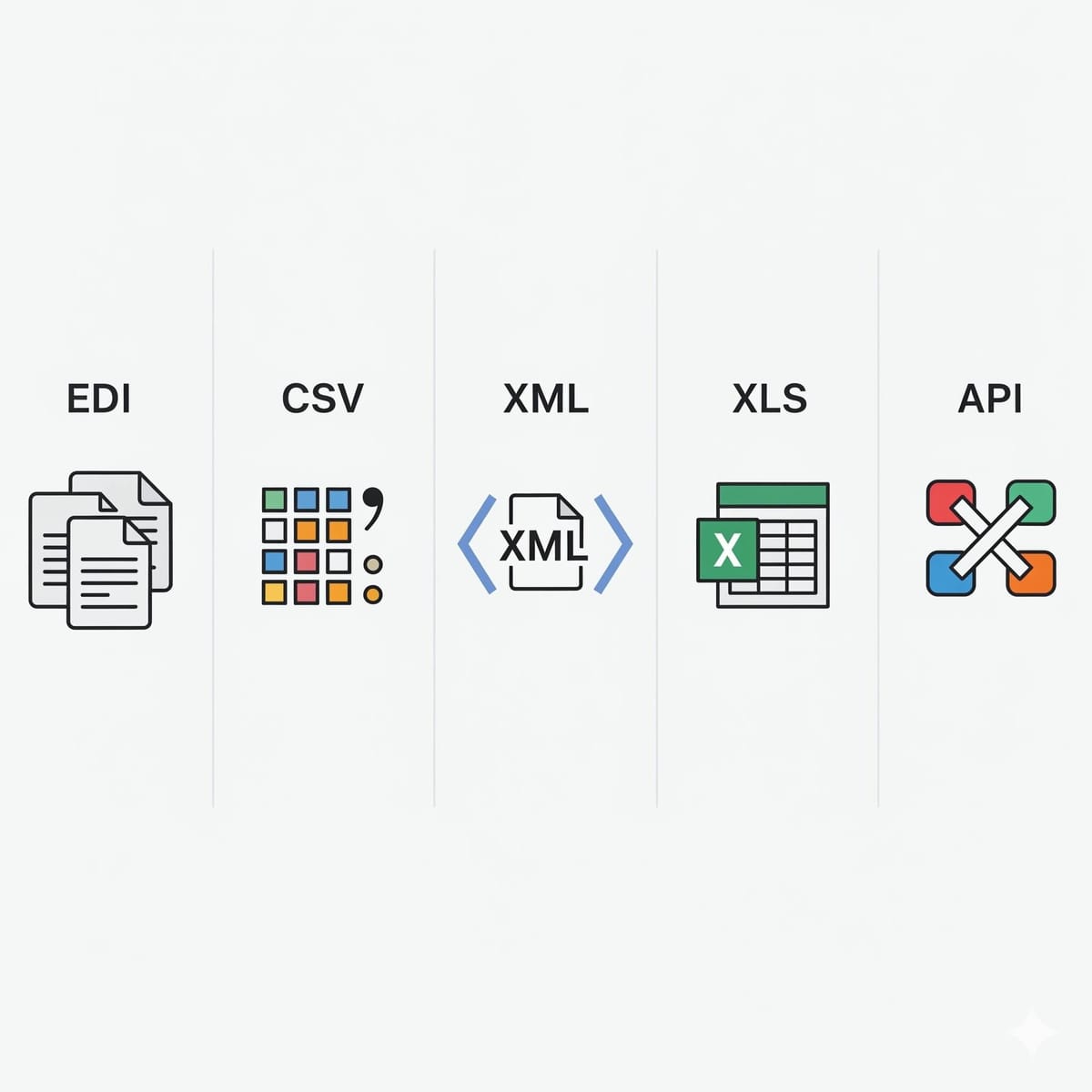
Payer Control equips payer teams to build a normalized, auditable, and visible data platform for claims, enrollment, and prior authorization information—regardless of source format. With multi-format support (EDI 834, 837, 277, 999, CSV, XML, APIs), automated validations, error tracking, and real-time alerts, Payer Control enables you to:
- Bring disparate inputs into a standardized, accessible layer for API consumption
- Route exceptions and errors directly to business users, reducing IT support burden
- Track all data lineage and changes, essential for audit and regulatory response
- Monitor record completeness, duplicates, and rejection rates in real time
- Enable non-technical teams to access data and resolve issues quickly
Your organization gains control and visibility across enrollment, claims, and prior authorization, with strong support for compliance reporting and investigation workflows—critical as CMS-0057-F raises audit expectations. For additional insights on related controls, see our guide on real-time audit trails in healthcare EDI.
Best Practices for CMS-0057-F Assessment
- Always validate with real, production-like data samples—synthetic records can mask live errors or mismatches
- Combine business and technical ownership on every mapping and validation checkpoint
- Normalize and document identities across member, subscriber, and internal keys, including household and coverage transitions
- Use workflow tools to manage exceptions instead of manual, email-based corrections
- Provide audit trails so business users can investigate issues directly without IT tickets
Organizations find that an assessment led by both IT and operational leaders delivers better remediation, faster gap closure, and clearer audit packages for executive signoff.
Readiness Metrics to Monitor Weekly
- Completeness rates by transaction/source type
- Timeliness/latency of record updates
- Duplicate or conflicting record rates
- Identity match rates for members and providers
- Rejected transaction and exception workflow close rates
- API and system uptime
- Percentage of denials with explicit, regulatory-compliant reasons
- Number and status of open critical gaps or defects by owner
Common Readiness Gaps—and How to Address Them
Fragmented Identity
Payers often struggle with inconsistent or legacy identifiers across member and provider data. Solution: use crosswalk tables and detailed lineage mapping, and test every known transition scenario such as household updates and retroactive plan changes.
Uncontrolled File and Format Variations
Trading partners or vendors may alter layouts and codes without notice. It is important to version and track every file definition and to quarantine unexpected changes before they impact downstream systems.
Manual Exception Handling
When business users are reliant on email for data resolutions, ownership, correction, and audit history suffer. Exception management tools should assign errors, track actions, and document final disposition for compliance and operational speed.
Testing Only with Synthetic Data
Synthetic test data can help early, but only live operational samples reveal practical gaps like missing fields, late records, or mismatched identifiers.
Assessment Deliverables: What Your Evidence Package Should Contain
- Documented scope, systems, APIs, and department owners
- Detailed system and feed inventory across all data sources and formats
- Comprehensive data lineage diagrams from source to API
- Mapping workbooks and validation results for every data field
- Identity match and reconciliation rates
- Error/exception workflow documentation
- Audit and security controls for each workflow
- Remediation scorecard with risks, owners, and plans
- Executive dashboard with real progress on compliance exposure
CMS-0057-F Readiness FAQ
When do the CMS-0057-F API requirements generally begin?
The general start date for compliance is January 1, 2027 for most impacted payers. Actual applicability may depend on payer category and plan/program details.
Which APIs must be assessed for CMS-0057-F readiness?
Payers must assess Patient Access, Provider Access, Payer-to-Payer, and Prior Authorization APIs, along with all supporting data, identity, security, monitoring, and operational controls.
Is API deployment alone sufficient for readiness?
No. Readiness depends on underlying data completeness, accurate member/provider matching, correct mappings, monitored security, and operational evidence—not just endpoint availability.
Why include EDI data in a CMS-0057-F assessment?
Enrollment, claims, and related EDI transactions fuel downstream API data. Delays, rejections, or inconsistent transformations can undermine compliance—even if your endpoints appear functional.
How can payer teams minimize data risk for CMS-0057-F?
Standardize incoming formats before load, validate records, manage lineage, promptly resolve exceptions, and maintain complete audit trails—capabilities Payer Control is designed for.
Moving from Assessment to Action
Treat compliance not as a one-time checklist, but as an ongoing operational program with real metrics, assigned ownership, and auditable records. Payer Control is ready to partner with your team—whether you are just beginning assessment, looking to scale monitoring, or in need of an advanced normalization and workflow platform for CMS-0057-F success. Contact us at 877-551-9050 or info@boldvan.com to schedule a readiness discussion.
Looking for deeper insight into specific EDI data controls or operational best practices? You may find value in these related resources: